
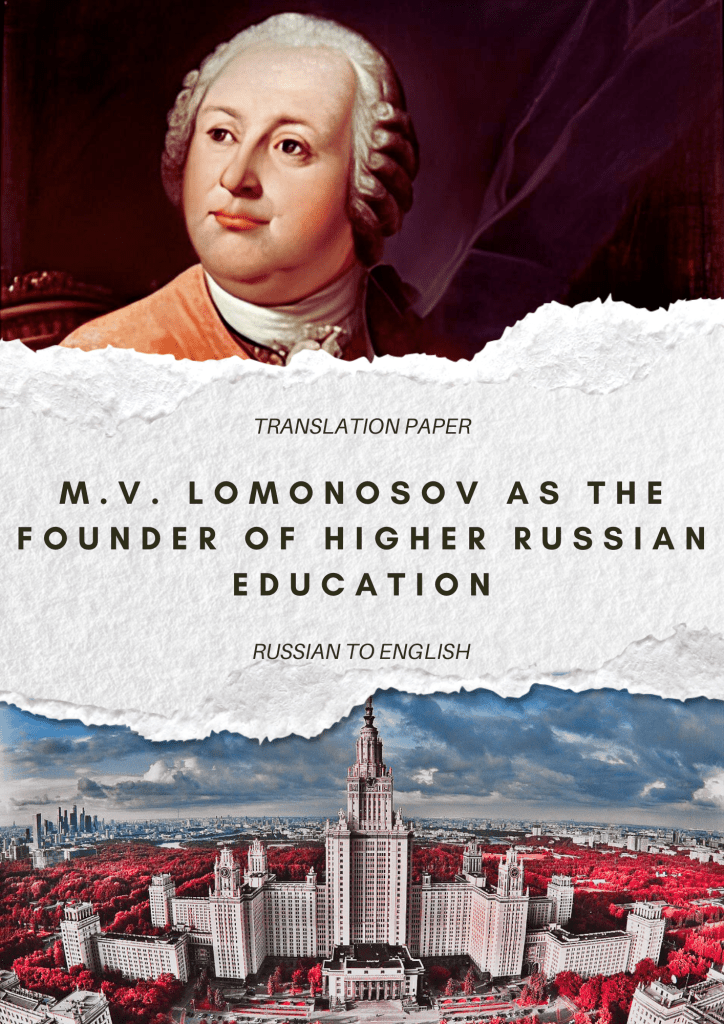
What does it take to build a university in a society rooted in class, privilege, and tradition? This translation explores M.V. Lomonosov’s radical vision for higher education in 18th century Russia, one that centers science, accessibility, and national identity. It’s not just a look at the past, but a reflection on what inclusive education should mean today.
In this historical and philosophical translation, Mikhail Lomonosov emerges as more than a scientist, he becomes a pioneer of educational equity. At a time when academia was the domain of the elite, Lomonosov argued for secular, state-supported universities, instruction in the national language, and open access for students of all backgrounds. His vision didn’t just challenge the norms of his era, it laid the foundation for what a truly national system of education could look like.
The piece touches on themes of democratization, scientific progress, and pedagogical innovation. Lomonosov’s commitment to creating learning spaces grounded in merit, inquiry, and cultural relevance still resonates today. Translated by İsmail Çetin, this paper offers not just a historical contribution, but a timely reminder of education’s power to shape societies.
Team LangMark

 LangMark